
Concrete Pads and Small Concrete Jobs in Logan, Utah and Cache Valley
S&C Handyman Services forms and pours concrete pads and small concrete jobs for homes in Logan and around Cache Valley: a pad beside a shed, a small slab, a footing for a pergola post, or fence posts set in concrete. Seth and Collin, the owners, do the work: forms and string lines over a gravel base, the pour, control joints and a troweled finish. Every job starts with a free quote, and you know the price before anything is poured.
Call or text: Seth (385) 615-5295 Text Collin (208) 240-0698 Text
- Owner-operated
- Fully insured
- Free quotes
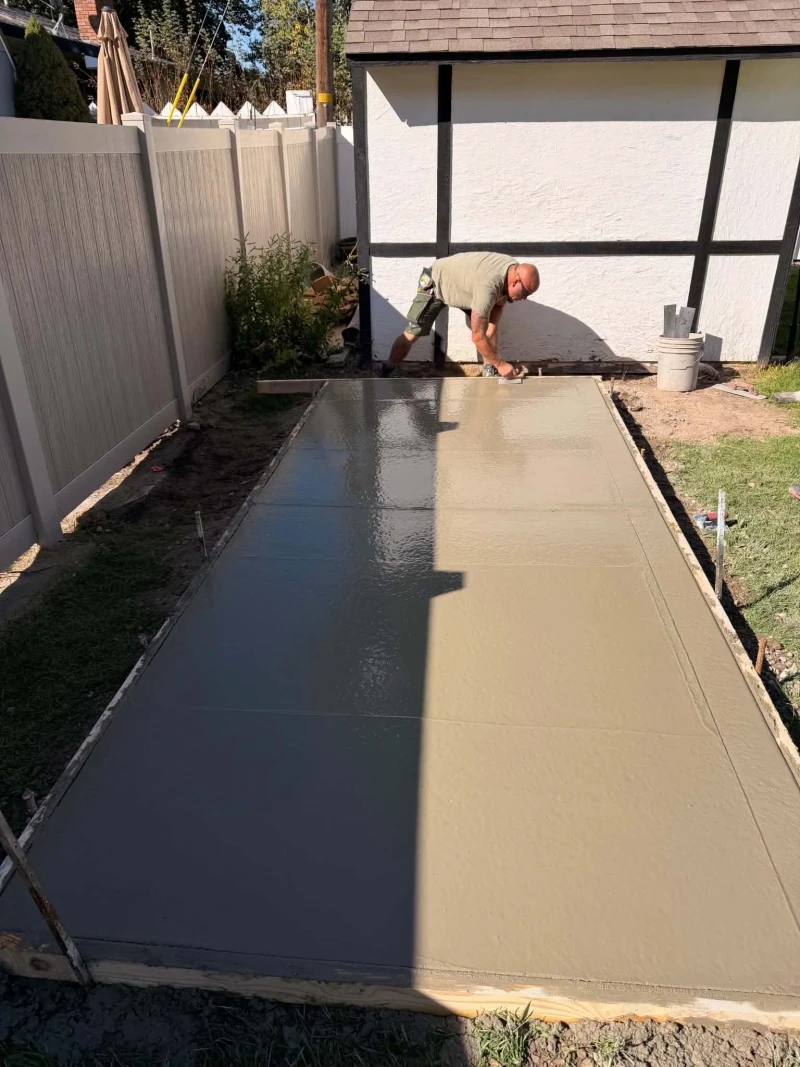
What a small concrete job with us covers
- Layout with lumber forms, steel stakes and string lines
- A gravel base leveled inside the forms
- The pour, floated and troweled smooth
- Control joints tooled across the slab and finished edges
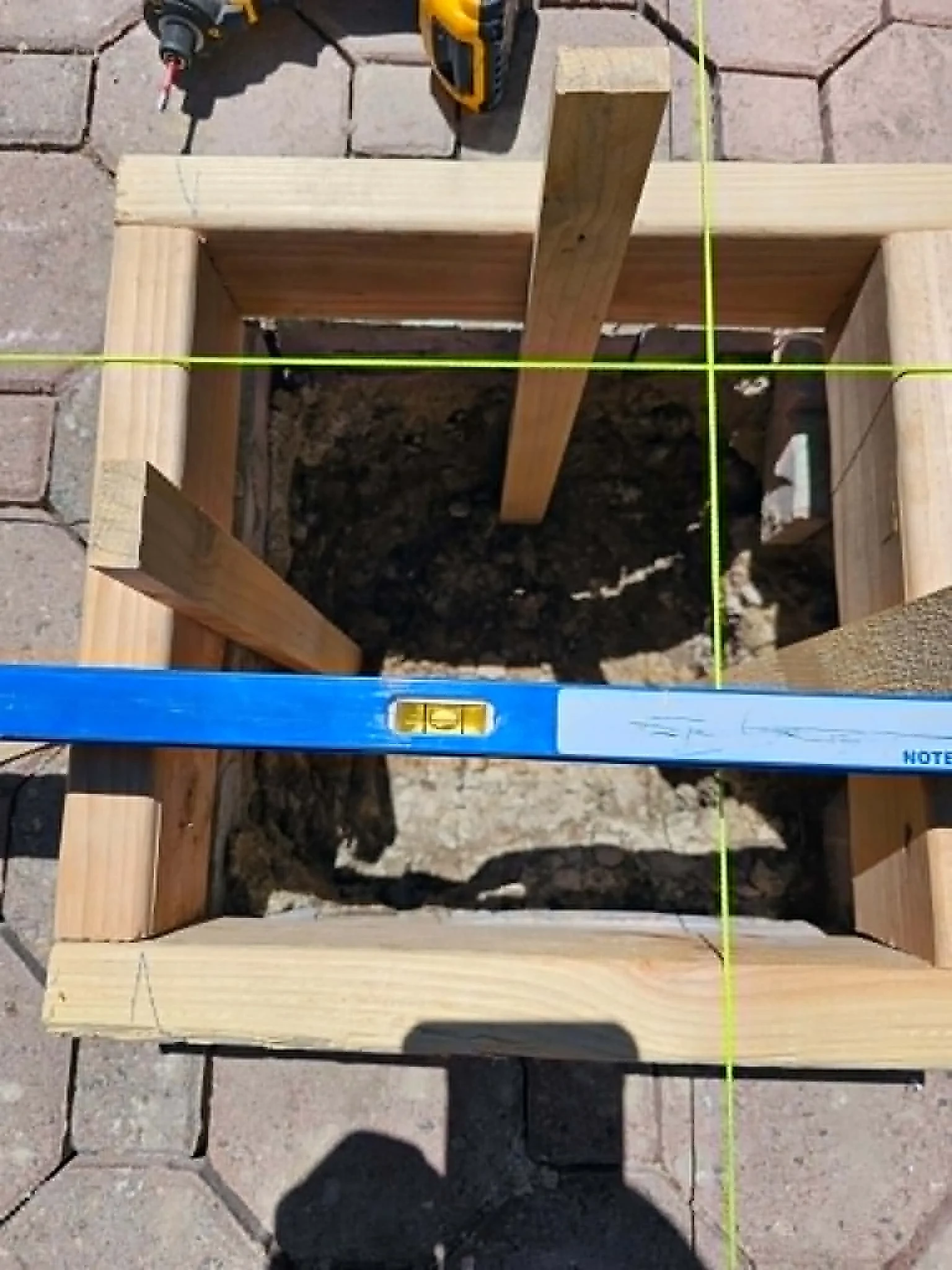
- Footing holes dug and formed for pergola posts, even through pavers
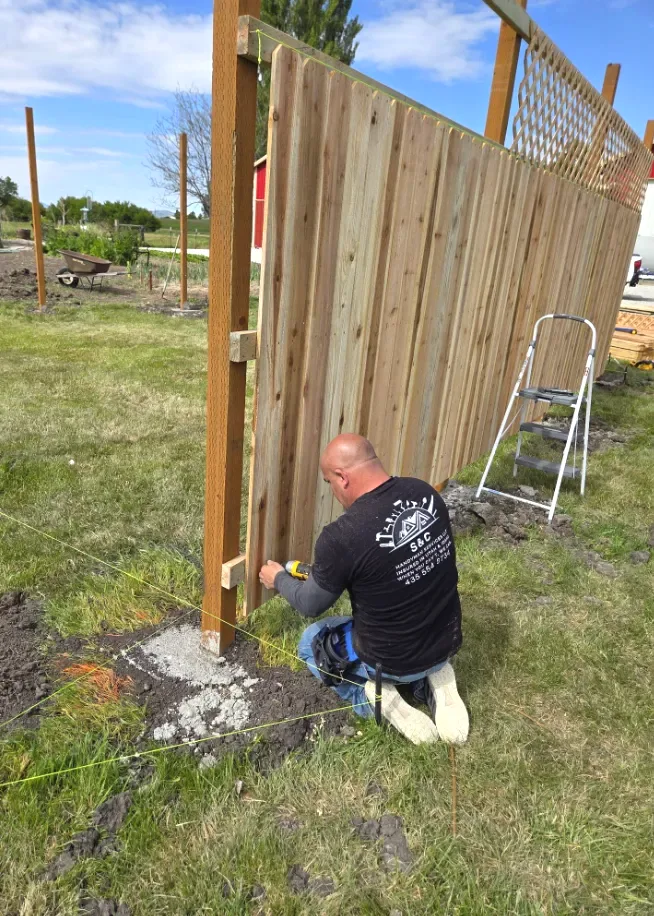
- Fence posts set in concrete
- The work area cleaned up after the pour
How the backyard pad beside the shed went in, step by step
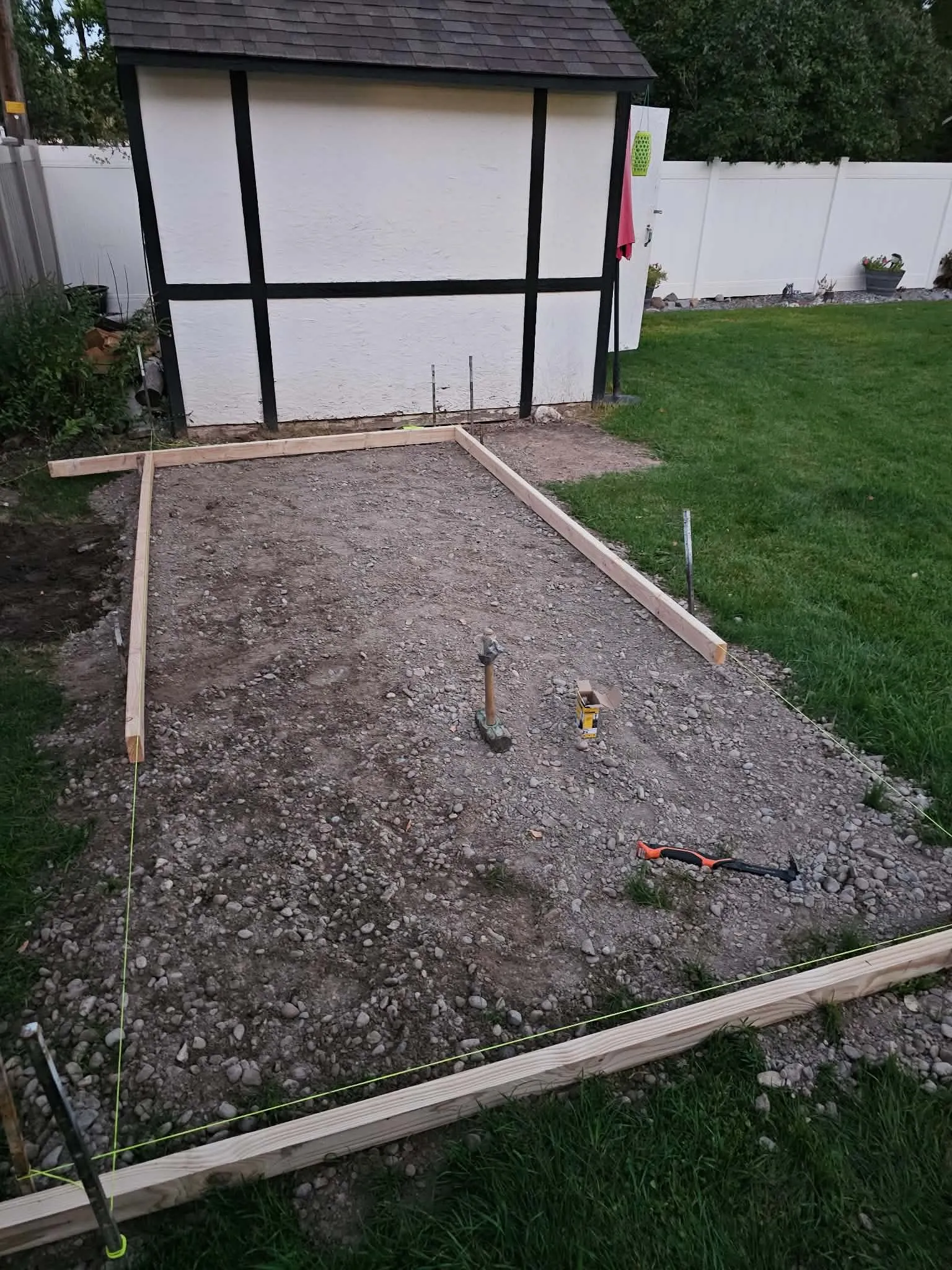
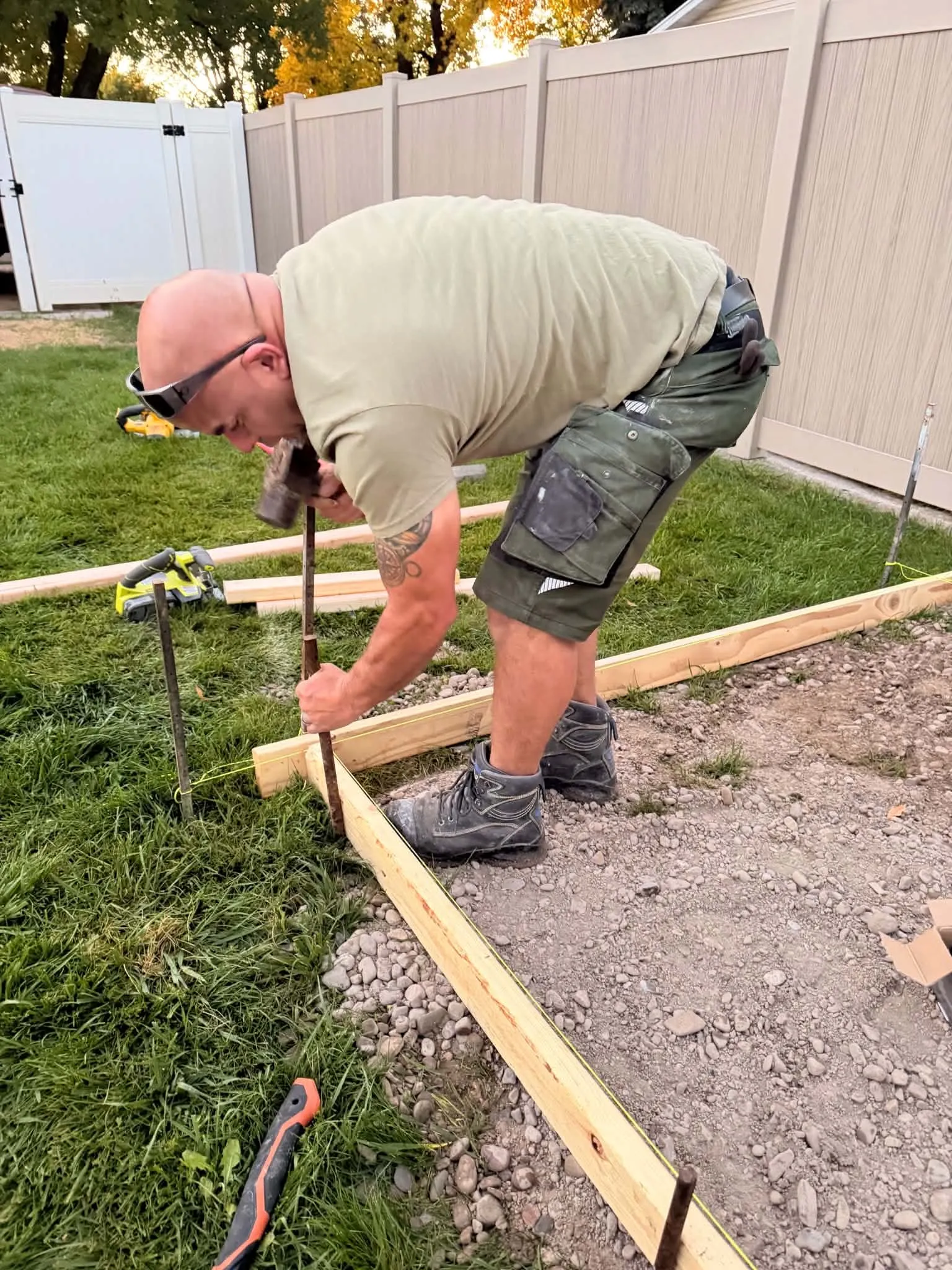
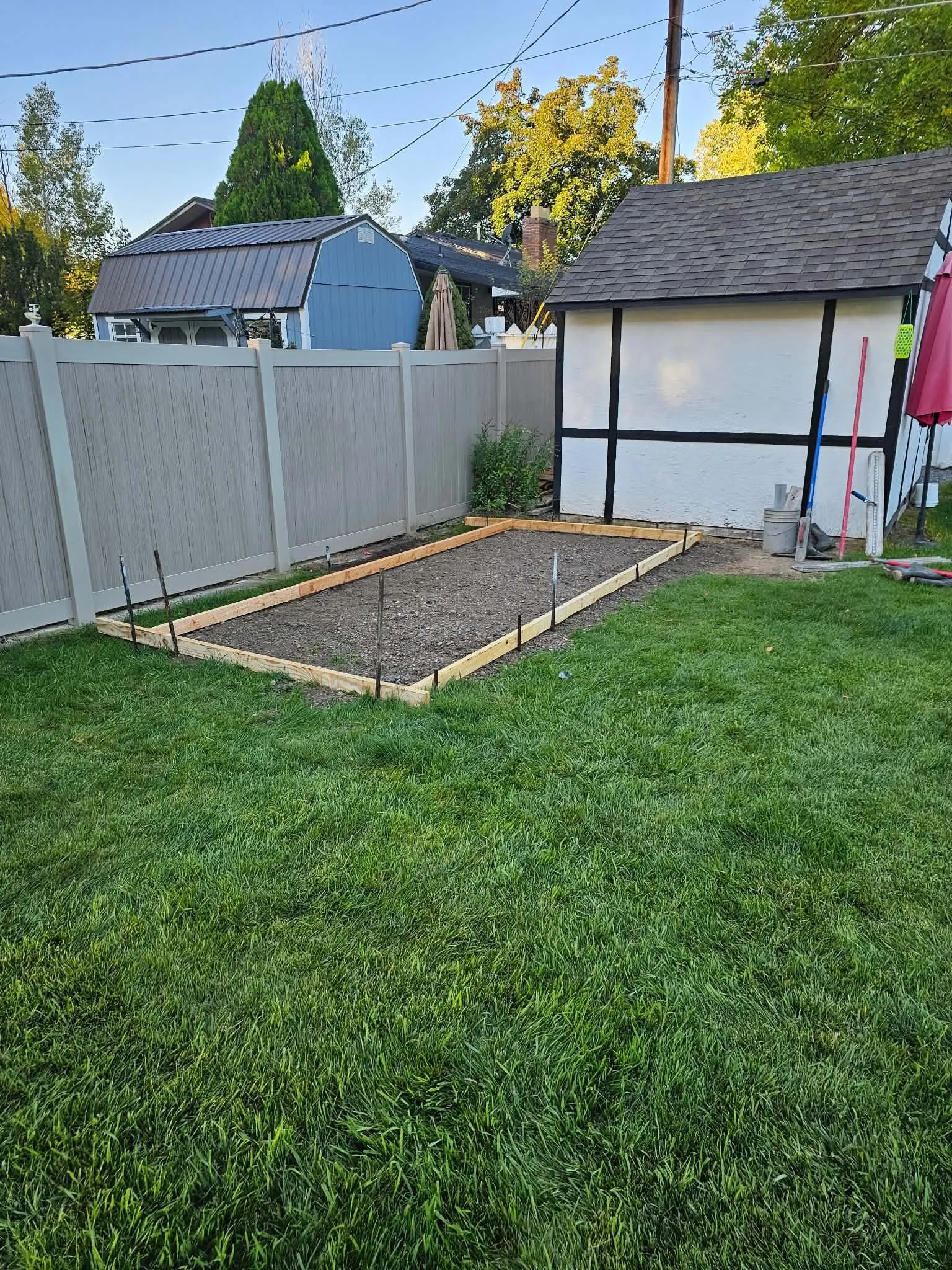
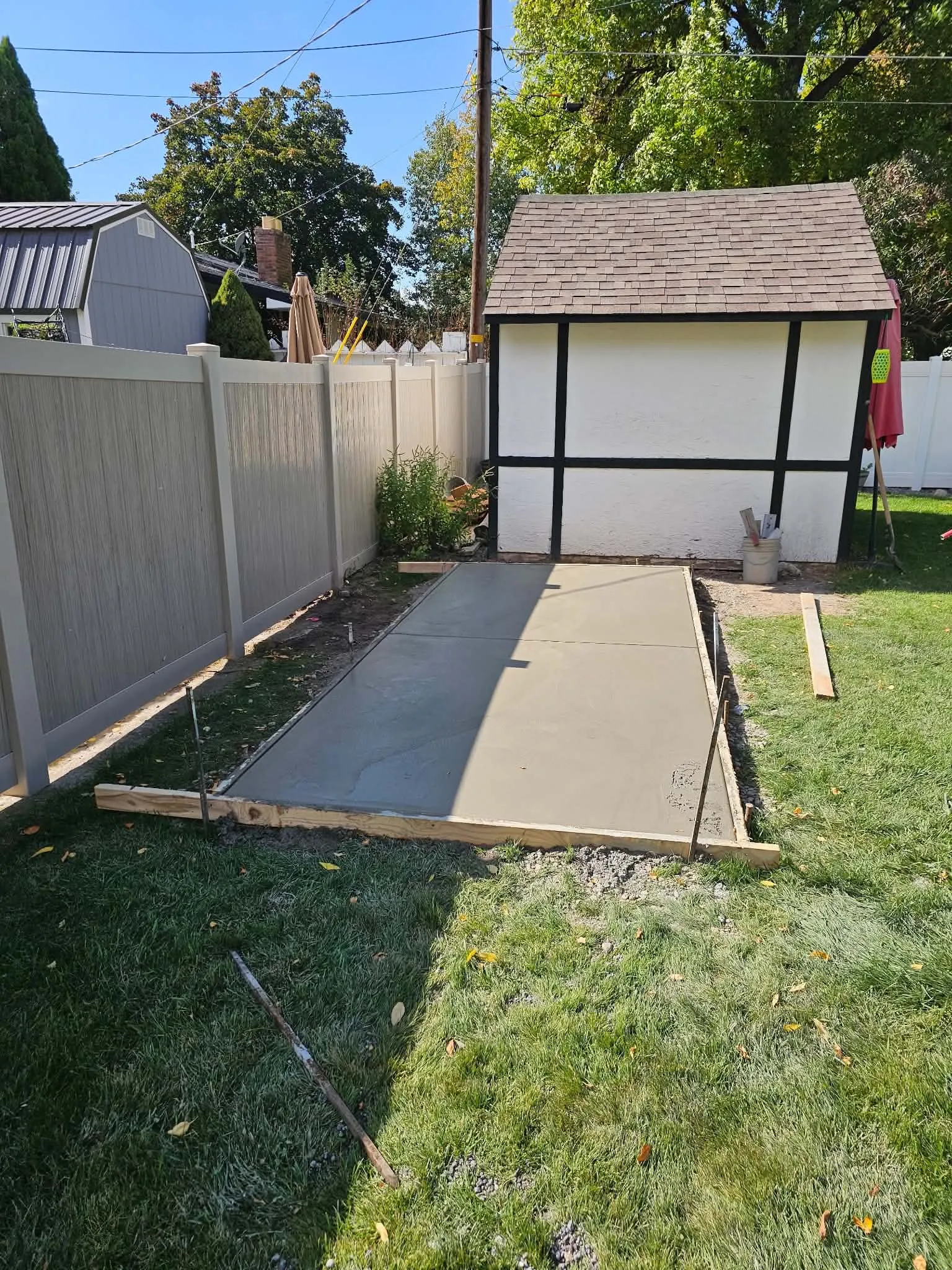
This pad sits in a backyard next to a white shed with black trim and a vinyl fence. It started with lumber forms and string lines staked out over a gravel base. Seth drove steel stakes to hold each form board in line, and the finished forms ran around the leveled base before any concrete came. Forms have to be braced well enough that the weight of wet concrete can't push them out of line, so the stakes matter as much as the boards.
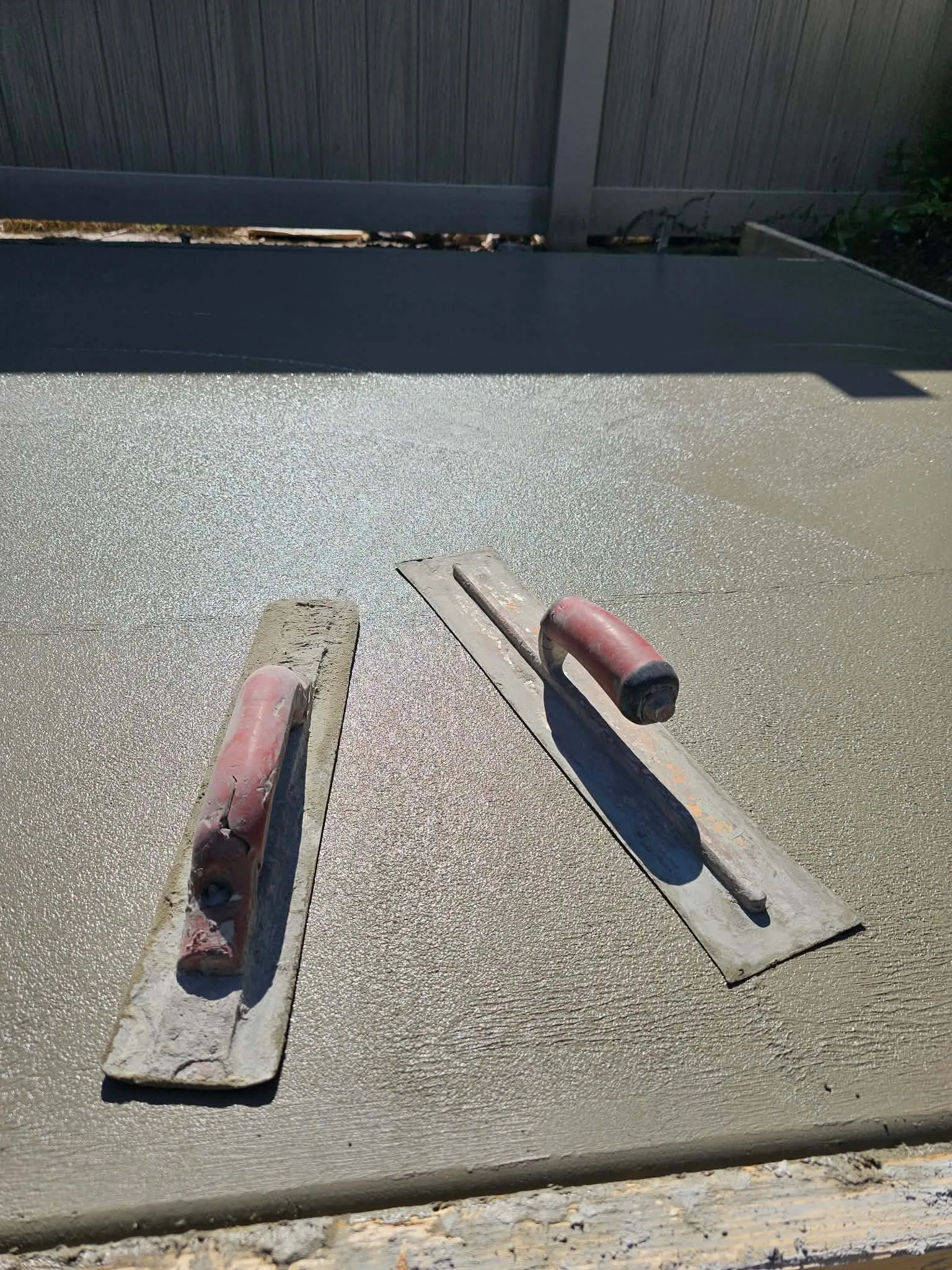
Then came the pour. While the slab was still wet, Seth finished its edges and tooled control joints across it, and a concrete float and a steel finishing trowel left the surface smooth. The last photo shows the new pad alongside the shed with the lumber forms still in place.
Why the base under a concrete pad decides how long it lasts
Poor ground preparation is on the concrete industry's short list of reasons slabs crack. The National Ready Mixed Concrete Association's guide to cracking says to remove all topsoil and soft spots, then set the slab on soil or granular fill that is well compacted by rolling, vibrating or tamping. It also says to slope the slab, and the ground under it, so water drains away.
That last point matters in Cache Valley, where spring snowmelt can pool against a shed or fence. The same guide says to clear snow and ice before a pour and never to place concrete on frozen ground. If the spot you have in mind stays soggy into spring, mention it when you ask for a quote.
Where a concrete pad cracks, and how control joints decide it
Concrete shrinks as it sets and dries, and it is weak when it gets pulled apart, so some cracking is normal. Control joints are planned cracks: grooves that give the slab a straight line to crack along. The industry guide on joints spaces them at no more than 24 to 36 times the slab's thickness, about 10 feet on a 4-inch slab, and no more than 15 feet apart.
The same guide wants each panel square or close to it, never more than one and a half times as long as it is wide, and each groove at least a quarter of the slab's depth and no less than an inch. Tooled joints are run early in the finishing and run again later so the groove stays open. It also notes that wire mesh will not stop cracking, though it can keep cracks from opening wide.
Pouring concrete when Cache Valley nights turn cold
The average last spring frost at the Utah State University station in Logan is May 7, so spring and fall pours need a close eye on the forecast. The American Concrete Institute's guide treats it as cold weather when the air drops to 40 degrees or below while new concrete is being protected. Fresh concrete has to be kept from freezing until it reaches about 500 psi, roughly two days at 50 degrees, and concrete that freezes early can lose up to half its strength.
Outdoor slabs here also face years of freezing and thawing. The ready mix association calls for air-entrained concrete on slabs exposed to freezing weather. Curing, which means keeping new concrete moist and warm, typically runs 3 to 7 days, with the concrete kept above 50 degrees. Insulated blankets, tarps, and straw under plastic are the usual covers, and corners and edges lose heat first.
How deep footings and fence posts go in Cache Valley ground
Logan's building department lists a frost depth of 30 inches for homes and 36 for commercial work, and Cache County lists 30 inches below grade. Under the residential code Utah uses, exterior footings go at least 12 inches below undisturbed ground, and permanent supports must be protected from frost, most often by going below the frost line. Footings may not rest on frozen soil. Small freestanding accessory structures have some exceptions, so the structure and your city set the exact depth.
Footings come up most with a pergola or patio cover. On one louvered pergola we pulled up pavers where a post would stand, dug the footing hole, and set a wood form and string lines over it, with a level checking the post base for plumb. On a cedar privacy fence we set the posts in concrete before the boards went on. Before any hole is dug, Blue Stakes of Utah asks for notice through 811 at least three business days ahead, and the service is free.
What changes the price of a concrete pad or footing
Call or text Seth at (385) 615-5295 or Collin at (208) 240-0698, Monday to Thursday, 8 am to 5 pm, and text a photo of the spot. You get a free quote and know the full price before we pour, then we set a day, do the work and clean up. The jobs on this page are pads, small slabs, footings and posts; if yours is bigger, describe it and we'll tell you whether it's one for us. These things move the price:
- The size and thickness of the pad, or how many footings and posts
- Digging out sod, roots or old concrete before the base goes in
- How much gravel the base needs, and how level the ground is
- How far the concrete has to travel from the street to the spot
- Blankets or covers when a pour runs into cold nights
- Permits: Logan's permit guide lists a patio as needing one, while sidewalks and driveways at ground level are exempt, so check with your city
A backyard pad, a pergola footing and fence posts in concrete
Seth's newest pad beside a shed, from forms to the finished slab, then a pergola footing dug through pavers and a cedar fence post set in concrete.
“During the process both Seth & Collin were professional and finished the work pronto!”
Serving Cache Valley & Southern Idaho
S&C is a handyman in Logan, Utah. The outline on the map is the area we cover across Cache Valley and into Southeast Idaho. Concrete Pads comes up in Hyde Park , Smithfield and Richmond . See the towns we serve.
Concrete Pads questions
Do I need a permit for a concrete pad?
It depends on your city and the job. Logan's residential permit guide lists a patio among the projects that need a building permit, and exempts sidewalks and driveways no more than 30 inches above the ground beside them. Call your city's building office before the pour, and check HOA rules if you have them.
Why do concrete pads crack?
Concrete shrinks as it sets and dries, and it is weak when pulled apart, so some cracking is normal. Control joints give it a straight groove to crack along, spaced about 10 feet apart on a 4-inch slab. A soft or uneven base, too much water in the mix and skipped curing cause cracks too.
How long before I can use a new pad?
Plan on days, not hours. Curing typically runs 3 to 7 days with the concrete kept moist and above 50 degrees, and cold weather slows it down. Ask us about the timing for your pad and what you plan to set on it.
Can concrete be poured in cold weather?
It can, with protection. New concrete has to be kept from freezing until it reaches about 500 psi, roughly two days at 50 degrees, because concrete that freezes early can lose up to half its strength. In Cache Valley that means watching spring and fall forecasts and covering a new pad when nights turn cold.
How deep do footings go in Logan?
Logan's building department lists a 30-inch frost depth for homes, and Cache County lists 30 inches below grade. Footings for permanent supports must be protected from frost, most often by going below that line, with some exceptions for small freestanding structures. Your city and the structure set the exact depth.
How much does a concrete pad cost?
We quote each job for free, and you know the full price before we pour. The size and thickness, digging out sod or old concrete, the gravel base, how far the concrete has to travel, and cold-weather covers all change the price. Call or text Seth at (385) 615-5295 or Collin at (208) 240-0698 and text a photo of the spot.
Where these facts come from
- CIP 4, Cracking Concrete Surfaces: subgrade, frozen ground, air entrainment (National Ready Mixed Concrete Association)
- CIP 6, Joints in Concrete Slabs on Grade: joint spacing, depth and panel shape (National Ready Mixed Concrete Association)
- CIP 11, Curing In-Place Concrete: 3 to 7 days, above 50 degrees (National Ready Mixed Concrete Association)
- CIP 27, Cold Weather Concreting: air entrainment, covers, corners and edges (National Ready Mixed Concrete Association)
- Cold Weather Concreting, citing ACI 306R-16: 40 degrees, 500 psi, strength loss (NIH Office of Research Facilities technical bulletin, April 2021)
- Current Building Codes and Engineering Design Requirements: frost depth (Logan City, 2023)
- Building code information: depth for frost protection (Cache County Building Division)
- 2021 International Residential Code as adopted in Utah, R403.1.4 minimum footing depth and frost protection (UpCodes)
- Average Last Spring Frost and Suggested Vegetable Planting Dates in Utah: Logan USU, May 7 (USU Extension)
- When is a Residential Building Permit Required? (Logan City Building Department)
- Notify 811 at least 3 business days before digging (Blue Stakes of Utah 811)
Other jobs we can help with
- Pergolas & Patio Covers Cedar pavilions, louvered pergolas, patio covers and clear-panel deck enclosures. Learn more
- Fence Repair Leaning posts, broken boards and sagging gates fixed, and new cedar fences built. Learn more
- Deck Repair & Staining Deck, stair and railing repairs, then a full refinish: washed, sanded and stained. Learn more
- Service Areas Logan, Cache Valley and Southern Idaho: the towns we serve. Learn more
Let’s Get Your Project Done
Tell us what you need and we’ll get back to you with a free, no-obligation quote. Prefer to talk? Call or text (385) 615-5295.
Availability
Monday–Thursday, 7:00 AM–5:00 PM. Call or text any time during business hours and we’ll set up a visit that fits your schedule. We respond fast.
Thanks, we got it!
We’ll get back to you shortly with your free, no-obligation quote. Need us sooner? Call or text (385) 615-5295.